


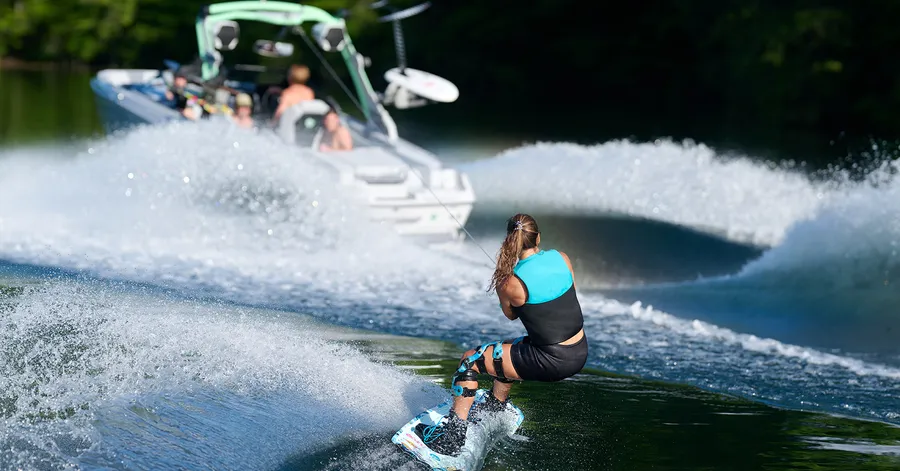
Wakeboarding in the Tennessee Valley and Central Alabama is one of the most effective ways to maximize your time on the water. Whether you are taking advantage of the glass-calm mornings on Smith Lake or navigating the expansive stretches of the Tennessee River near Chattanooga, mastering the basics of wakeboarding adds a high-energy dimension to your boating lifestyle. While the sport has a definitive learning curve, the right equipment and a systematic approach to your first few sessions will significantly decrease your frustration and increase your time spent "shredding the gnar."
The Fundamentals of Wakeboarding
Wakeboarding is a hybrid sport that combines elements of surfing, snowboarding, and water skiing. Riders are pulled behind a boat at speeds typically ranging from 18 to 24 miles per hour, standing sideways on a specialized board. The objective is to use the boat's wake as a ramp to perform jumps and maneuvers. On deep-water lakes like Smith Lake, the displacement of a proper towboat creates clean, consistent wakes that are ideal for both beginners and advanced riders.
Essential Gear for Beginners
You cannot successfully wakeboard without the proper technical equipment. Using gear that is poorly fitted or not designed for your specific weight will directly hinder your ability to stand up and plane.
- The Wakeboard: For beginners, a board with a "twin-tip" or symmetrical design is recommended.
- Bindings and Boots: These should be snug but not restrictive. Adjustable boots are a practical choice if multiple family members will be sharing the board.
- Tow Rope and Handle: Unlike a stretchy water ski rope, wakeboard ropes are non-stretch to ensure consistent tension during jumps.
- Life Jacket: A Type III ski vest is a non-negotiable safety requirement for all tow sports. Visit our Parts department to ensure your vest meets current safety standards.
Selecting the Right Board Size
Choosing a board based on your weight is critical for buoyancy and stability.
- Riders <100 lbs: <130 cm board
- 130–180 lbs: 135–139 cm board
- 200–275+ lbs: >144 cm board
Every manufacturer has specific sizing charts; verify these before making a purchase. Using a board that is too small will make it incredibly difficult to get out of the water, especially if you are learning on Logan Martin or Lay Lake.
The Role of the Boat
The quality of your wake is determined by the boat's hull design and displacement. A boat engineered for wakeboarding utilizes internal ballast tanks to push the hull deeper into the water, creating a larger wave. For beginners, a deep-V hull is beneficial because it helps flatten out choppy water, providing a smoother "runway" immediately behind the boat. If your current vessel lacks the power to pull a rider out of the water effectively, exploring Mercury Repower options can provide the necessary torque.
Step-by-Step: Getting Up for the First Time
- The Starting Position: Float on your back with the board horizontal to the boat. Keep your knees bent toward your chest and your arms straight.
- The Pull: As the driver applies throttle, stay crouched. Do not try to stand up immediately; let the boat pull you onto the surface of the water.
- The Pivot: Once the board begins to plane, rotate your dominant foot to the back.
- The Stance: Keep your knees slightly bent to absorb vibrations and stay slightly leaned back to keep the nose of the board above the water.
Frequently Asked Questions
What is the best time of day for wakeboarding?
Early morning or late evening provides the calmest water on the Tennessee River and Smith Lake, which is essential for beginners learning to balance.
Can I trade in my current boat for a dedicated towboat?
Yes. If your current boat doesn't produce the wake you need, our Sell / Trade program can help you transition into a specialized model from our New Boats For Sale inventory.
How do I find local wakeboarding groups?
We often host community gatherings and demo days. Check our Events page to connect with other local riders and our Staff.